Waiting

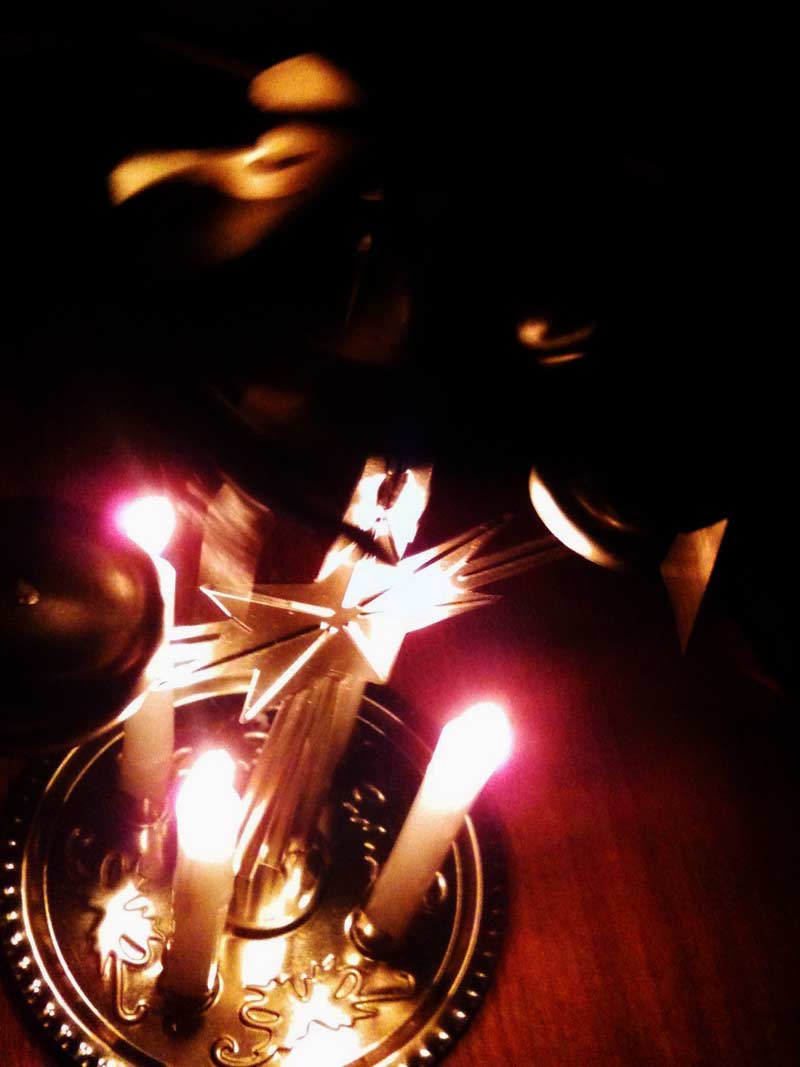
almost top view of fancy liturgical candles on a gold mount.Waiting. Waiting. Waiting.

All this waiting.

I’m tired of waiting.

And here I find myself in an entire season of waiting.

I’m tired of waiting for friends and family to find jobs.

I’m tired of waiting for the housing market to rebound.

I’m tired of waiting for the country to stop arguing about divisive issues with derogatory discourse.

I’m tired of waiting for my denomination to stop fighting to its death over who gets to be a minister and instead start ministering to the wounds of the world—including the ones we ministers have caused.

I’m tired of waiting to find time for ritual artistry, mission vision and sermon creation at the end of the week after the administration and budget balancing work is done.

And now, in this season of waiting and anticipation of the beautiful light of Christmas, it seems there are even more things both to do and to fail to do, more finances to worry about, more details to manage and more necessary distractions.

When did we change from the children who couldn’t wait for Christmas to arrive to the adults who can’t wait until Christmas is over?

How is it we find ourselves hurtling toward the Holy Child each year as one more task to get past?

Just wait until next Christmas, we promise ourselves, it won’t be this way next year!

But why wait?

Start now, with 12 days left until Christmas Eve.

Reclaim THIS Christmas right now.

There really is no need to just wait until next year.

Pause a moment now, yes, wait just a moment, and consider what most evokes the holy to you in this season. Spend another moment and let yourself be surrounded by that particular sense of the holy.

Now, in the 12 days that remain, consider one life-giving activity or tradition or memory from childhood or years past, and find another moment or two to remember it or even reclaim it.

One year, for me, this was to open a set of angel candle chimes from their 99-cent box, build them, light them and watch the angels spin from the rising heat of the candlelight. The table they were on was a mess, but I didn’t care. All I saw was the light and motion, and I heard the faint sound of a Christmas long past that became Christmas present.

What in your church, what in your home, what in your heart would give you a holy moment?

In each day, in those odd moments of reflection or even concern, pause to consider the holy.

Pause to surround yourself with a holy memory or create a holy moment.

Pause with the hope and prayer that come Christmas Eve, your season will already be filled with holy remembrances, holy moments and holy light.

Welcome the Holy Child with your heart already filled with a sense of Divine presence in your life.

We wait each year for the celebration of Divine Light in our lives, yet there really is no need to wait.

The Holy Light shines already.

Divine Creator, in this season of anticipation, guide us toward our hopes for the future fueled by our fondest memories of the past. We pause in prayer and in hope that in any moment time expands to fill with the Holy Light of Divine Love. In your most holy names we pray, Amen.

***

Rev. Karen Clark Ristine is a minister at Mission Hills United Methodist Church. After more than 20 years as a journalist, she entered seminary in 2006 and has been working in ministry ever since. After a lifelong tradition of sending out scores of Christmas cards each year, she was surprised to discover the irony that, as a minister, she no longer seemed to have time to continue that tradition. 
Lost in God

Someone asked, “What is love?” God answered, “You will know when you lose yourself in Me.”

–Jalalal-din Rumi, 13th century Sufi mystic

For the Sufi mystic, losing oneself in God is the answer. In the modern world, though, how many of us can completely lose ourselves in the search for God? Between getting the kids ready for school and feeding our families, working, and volunteering for our faith community, some of us may feel as if we have lost God in the process of living. But it is important to recognize that God is waiting for us to get closer and lose ourselves in God’s loving embrace. Living can be found in losing oneself. But how does one do this?

Like the Jewish mystics, you might lose yourself in the sacred scriptures. You could spend 15 minutes each morning, reading and reflecting on what the words you read mean to you. Perhaps you could journal your thoughts—giving yourself the deadline of Christmas—like a countdown of this holy month, which culminates in the celebration of the birth of baby Jesus. Rejoice in the gift of the one who so loves us. When you awaken on Christmas morning, read your journal and witness a birth of a new you.

Likewise, you might find, like the Sufi mystics, that music and dance is a useful tool for losing yourself in God. Decide today to spend each day rocking out to the music of your choice. Lose yourself in the words and sing at the top of your lungs. Spin around as if you are a Whirling Dervish and feel the loving embrace of God as you meditate on the beauty of the music spread before you—tantalizing your ears and heart. Feel your love of God in your body and lose yourself in this feeling.

This is the month of peace, forgiveness and love. In losing yourself in God, you just may find more of these in your life. Now, that is living!

Prayer:

Dear God, may I find a way to lose myself in you, each day, during this holy month. I recognize that sometimes I am so busy; and I cannot imagine how I can squeeze in another minute, but I desire to love more and thus live more. I covenant to spend time with you each day and, I hope I will find that the greatest gift given to me, when I awaken this Christmas morning, is the gift of life and…love. You said, “…faith, hope and love. But the greatest of these is love.” (1 Corinthians 13:13) I believe this, God. I will seek it, starting today. Amen.

***

Summer Albayati-Krikeche is a woman who speaks inside and outside of the church. She is a candidate for ordained ministry in the Unitarian Universalist church, and serves as an intern chaplain at Hoag Hospital in Newport Beach. While studying in seminary, Summer felt that all of the sacred scriptures called us to help the oppressed. Shortly, thereafter, she decided to help those considered the most marginalized in any society—orphans. In 2009, Summer founded Orphan Whispers, a nonprofit that helps orphans in conflict and post-conflict societies, and is currently focusing on the orphans in Iraq.  

Mr. Santa Chase

Nevertheless, those who receive instruction in the word should share all good things with their instructor. Do not be deceived: God cannot be mocked. People reap what they sow. Those who sow to please their sinful nature, from that nature will reap destruction; those who sow to please the Spirit, from the Spirit will reap eternal life. Let us not become weary in doing good, for at the proper time we will reap a harvest if we do not give up. Therefore, as we have opportunity, let us do good to all people, especially to those who belong to the family of believers.

Galatians 6: 6-10 (TNIV)

I was seven years old when Santa Claus appeared on my doorstep-long white beard, skinnier than I imagined and dressed in ‘normal clothes’ (perhaps he was going incognito for Christmas morning). But there he was! Carrying a package just for me!

My parents were delighted and looked relieved, and I was overjoyed to receive a handmade SASHA doll that Christmas! What a joyful day!

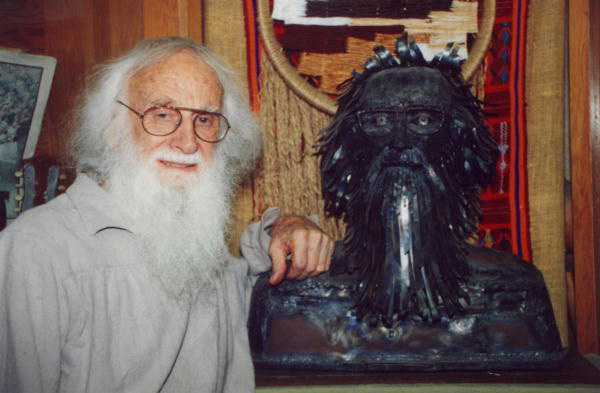
Charles Chase, aka SantaAs I grew up, I recognized Santa Claus in our small town. He worked in a shop called the Folk Music Center and was known-in his Claremont, California home as Mr. Chase. Mr. Chase (my Santa) made appearances throughout the year at the shop that sold those special dolls, along with guitars, ukuleles, banjos and drums, music from all over the world and the most fascinating coloring books I’d ever seen. The Folk Music Center, I imagined, was the southern California outpost of Santa’s Workshop, specializing in all-things-hippy.

Later in my life I heard the story from my parents’ perspective. As they were doing their Christmas shopping at the Southern California outpost of the Santa’s Workshop. they mistakenly picked up the display model container without the doll inside. They did not realize the container was empty until Christmas Eve when they were wrapping up the gifts for the grand unveiling on Christmas morning. Panicked, they phoned Santa at his home late Christmas Eve and asked him for some help. Instead of a cranky daughter who would open an empty package on Christmas morn, they woke to a delighted and amazed little girl who’d been privileged to a personal visit from Santa himself.

Mr. Chase, in his decision to help out a frazzled and panicked set of young parents, is the embodiment of Paul’s words in Galatians 6: 9-10:

Let us not become weary in doing good, for at the proper time we will reap a harvest if we do not give up. Therefore, as we have opportunity, let us do good to all people, especially to those who belong to the family of believers.

If we sow the seeds of love, joy, peace and hope in the busy holiday season, we will reap the harvest of the gospel of Jesus Christ! Conversely, if we sow the seeds of anxiety, distraction, stress and dysfunction, we will reap the harvest born of those negative things.

In our franticness and stress have we given up trying to do good? When does our activity become a spiritual detriment? How can we be the embodiment of the good news for others this season?

***

Rev. Dr. Krista S. Givens is a native of Southern California, where she began her work experience as an artist. She achieved her Bachelor’s Degree in Studio Art from Scripps College in 1994. Her call from God occurred rather suddenly in 1998 and God provided a path to attend seminary. Krista is a proud graduate of the Claremont School of Theology achieving her Masters of Divinity in 2001 and her Doctor of Ministry degree in 2007. Her doctoral thesis was centered in Ethics and pertains to the disciplinary rule for single pastors to be celibate and is titled: A Choice for Whole Love: Single and Celibate in the United Methodist Church. Krista’s previous appointments include an Associate Pastor position to the congregation of Kailua United Methodist Church in Kailua, Hawaii and a Senior Pastor position to the congregation of Westchester United Methodist Church in Los Angeles. She was ordained as an Elder in the California-Pacific Annual Conference in 2005 and has been the pastor at Hamburg’s International United Methodist Church since 2007.

At the Same Table

Psalm 35
Luke 22:14-30

Today we find ourselves in the second week of Advent, not only preparing to celebrate the incarnation of Jesus Christ, but looking even further into his life and ministry. Today we find Jesus near the end, gathered at the Passover meal, “eagerly desiring” to be at table one last time with those gathered in his midst. Soon after, he would be betrayed by one of his own, charged, convicted, and executed.

We look back to Psalm 35, a prayer for God’s help by a person accused falsely, persecuted by his enemies. The psalmist calls upon God to fight against those who fight him. The psalmist cries, “How long, O Lord, will you look on? Rescue me from their ravages, my life from the lions.” He continues, saying, if you save my life from these enemies of mine, then I will praise you.

The psalmist believes in his heart that God wants all servants of God to be well. Yet he struggles with reconciling how suffering at the hands of his enemies could possibly be in the interest of a great God.

How have you been repaid evil for good in your life? What is God’s role in any struggles or sufferings you face? How do you expect God to respond when you experience discrimination, singling out, or maltreatment?What might be the response of Jesus to such experiences?

Jesus, like the psalmist, is about to suffer at the hands of his enemies in today’s Gospel passage from Luke. Peter will deny him. Judas will betray him. What does he do? Unlike the psalmist, Jesus does not beg and plead with God. He does not wish for his enemies to suffer. Jesus instead gathers his friends and enemies all together, in one room. In their midst institutes the sacrament of Holy Communion, telling them, “do this in remembrance of me.” Gather together, share with one another, and be nourished.

After friends and enemies alike eat together. Jesus knows one will betray him. They almost immediately miss the point, arguing about who among them might be greatest. Even after a shared feast, they ask, “who will be first among us?” Jesus meets his disciples in their brokenness, and calls them toward wholeness. It’s a wholeness only encountered by being together.

Jesus calls us to gather with friends and enemies alike. Jesus calls us to sit at table with our enemies, along with our friends. Because it is in a place of nourishment, of community, of sharing, of reconciliation, that God ultimately works through each of us to restore us to wholeness.

This Advent, we are called to wait patiently for the coming of Christ. In places of prejudice, exclusion, and struggle, we patiently wait, continuing to meet face-to-face with even our enemies at table. In doing so, in opening our hearts even to those who hate us, we run the risk of running into the very Christ we thought had run from us.

***

Rev. Allison Rainey English serves as Associate Priest at St. Wilfrid of York Episcopal Church in Huntington Beach, California. Allison graduated from Claremont School of Theology with a Master of Divinity in 2008. Her passions for work in the church include liturgical development, pastoral care, youth ministry, and responsible social engagement/community building among the church.

No Vacancy

Luke 2:1-7

It was 9:30 on Saturday night the weekend after Christmas. We had driven 16 hours in one day and it was time to settle into a hotel. I had visions of my son waking up in Sedona and we would relive the western movies as the highlight of our trip from Wisconsin to California. My dreams quickly shifted as each hotel sign read, “No Vacancy.” No problem. We headed up to Flagstaff—there were tons of hotels there. Forty miles later we entered Flagstaff. The Christmas lights twinkled against the snowy background. The bustle of the city felt welcoming to our weary minds. We stopped at the Super 8. No vacancy. Days Inn. No vacancy. Marriott. No vacancy. I drove to the next set of hotels, and each one no vacancy. The expensive hotels. No vacancy. I drove down the main strip, into every little dive hotel. Before we could climb out of the car the sign switched to No Vacancy.  How can a city with more than 70 hotels not have a room! The people coming out of the hotel were the same ones we saw at the last stop—they too were looking. No Vacancy. I was beginning to feel like Mary and Joseph entering Bethlehem with no room for them to sleep.

Finally—one lone hotel—vacancy! I pulled in, ran into the office. It offered a king bed and we needed two beds. I went out to ask my son what he wanted to do. I stood there in amazement as a lady in a white pick-up and red trailer drove by the side of my parked car, scraping the entire driver’s side with her trailer until our tires locked together and she could drive no further. When she got out of her truck, she looked at me and said, “Don’t think I am going to be entirely responsible for this!”

Not only was there no room in the inn, now my donkey was broken! We were hours from home, it was 25 degrees out, the car was broken, and the only hotel room available just went to the next person. I imagine the people Mary and Joseph encountered as rude and uncaring as my encounter in Flagstaff—every aspect from the neon signs, the tired people trying to find a place to stay, the angry front desk clerks, and the faultless woman in the truck, it all said, ‘Go away! You are not welcome!’ Flagstaff may not have been Bethlehem, but it was that night.

Have you ever felt so unwelcomed? Have you made someone else feel that way? Mary and Joseph arrived in Bethlehem after traveling for days across the desert. Bethlehem means house of bread. Imagine a city full of bakeries…can you smell the aroma of bread drifting through the air?  Bethlehem was bustling with activity. It was time for the census. People were gathering with cousins and old friends similar to a family or class reunion, filling up every room available. The city that was full of life was not warm, but cold. The people had cold hearts and the innkeepers were tired of answering the door: “go away, we are full!”  Regardless of the people or location and hospitality available, the baby Jesus was born.

This Advent/Christmas season many people will close the doors on others who are in need. Every Christmas, Christ tries to enter into a world that is cold and uncaring, but a few will welcome him with loving hearts. There are many people waiting for someone who has arrived already to the majority of the world but not to them. They are waiting for new liberation from the pains of AIDS; from the frustration of immigration; for the curing of their addictions; waiting for the promise of new life and hope when life doesn’t seem to let up. How will you prepare your heart to receive the gift of love? In what ways can you share the love of God with someone close to you or a stranger in need? How can you be a channel of God’s care for them? May the Spirit of God open your heart, minds, and doors to welcome the Christ child with love.

***

Rev. Susan Oeffler

Waiting, Watching

When I was in elementary school I loved Fridays. Not only was it “tater tot day” in the cafeteria, but every Friday we played dodgeball during PE. Dodgeball was one of my favorite games; running, jumping, and yes, even the occasional opportunity to throw a ball at your classmate! (You know the one!) However, one of the best aspects of dodgeball was even when you were “tagged out” and having to wait on the sidelines, if your teammate caught an opponent’s ball your teammate could choose to have you come back into the game thus giving you a “do-over.” What I have learned in life as well as in dodgeball, is that the waiting can be hell. How absurd then that Advent, a whole season in the Christian tradition, is about waiting.

Like most seminarians I was coerced into studying biblical languages; it was just one of the many gifts of seminary. Through all the blood, sweat, and tears studying these languages caused me, I learned to love and value the original meaning of each intended word. For example, the words for waiting in both Greek and Hebrew are used at times as synonyms for watching. To make things worse, both languages suggest an attitude for which these two verbs should happen—both positive. Excuse me, but I am a child of the 80s. My generation has never known life without a microwave! We don’t wait well. According to the biblical languages, I am told not only to wait, but to be positive about it! It was one thing to wait on the sidelines as a kid, but as an adult? Come on! Let’s just be honest: waiting is about being in transition and transition can bring up a multitude of feelings, most of them unpleasant!

Over the last three months I have had a crash course in waiting, watching, and attitude adjustments. After almost a year of prompting by Spirit I did it; I quit my job, packed my stuff, and moved me and my dog to the great state of Washington in order to pursue more education. In my head I expected everything to be nicely wrapped and just waiting on me—after all, I did what Spirit prompted. I knew things would eventually work out, but did not expect to be waiting on a job, especially in this economic climate. As you can imagine, as the days passed with no calls of offers the fears grew and the questions began to surface. The questions soon led to deeper questions which I now see was part of the watching/preparing. The time I was able to dedicate to these questions has had a profound impact on the way I will go about my future work and practice. I almost missed it because I was too busy grumbling, complaining, and cursing at God about the waiting and so I forgot to participate in the watching. What I have learned (or maybe re-learned) is that the gift of waiting is the watching. Watching is finding God in the present even when the present is filled with uncertainty. Watching is our part; our participation which we do by asking the questions and going ahead by preparing ourselves as if that for which we are waiting is already here.

This year, my Advent is remembering that no matter how much I think I know what I need, God knows more. God is more creative than my wildest dreams, and when God insists that I wait, it is for a reason! My job offer did come and once again I was humbled and in awe not only because of the job itself, but because of the details that are so tailored to my situation—this job was created for me. If you find yourself like me, questioning and doubting while waiting, watch for the gift within the present and remember, God is always on time.

God’s People Are Comforted

Comfort, O comfort my people,
says your God.
Speak tenderly to Jerusalem,
and cry to her
that she has served her term,
that her penalty is paid,
that she has received from the Lord’s hand
double for all her sins.A voice cries out:
‘In the wilderness prepare the way of the Lord,
make straight in the desert a highway for our God.
Every valley shall be lifted up,
and every mountain and hill be made low;
the uneven ground shall become level,
and the rough places a plain.
Then the glory of the Lord shall be revealed,
and all people shall see it together,
for the mouth of the Lord has spoken.’A voice says, ‘Cry out!’
And I said, ‘What shall I cry?’
All people are grass,
their constancy is like the flower of the field.
The grass withers, the flower fades,
when the breath of the Lord blows upon it;
surely the people are grass.
The grass withers, the flower fades;
but the word of our God will stand for ever.
Get you up to a high mountain,
O Zion, herald of good tidings;
lift up your voice with strength,
O Jerusalem, herald of good tidings,
lift it up, do not fear;
say to the cities of Judah,
‘Here is your God!’
See, the Lord God comes with might,
and his arm rules for him;
his reward is with him,
and his recompense before him.
He will feed his flock like a shepherd;
he will gather the lambs in his arms,
and carry them in his bosom,
and gently lead the mother sheep.

—Isaiah 40:1-11

In this scripture I hear a conversation between characters from Winnie the Pooh. Owl, the wise one starts: “Comfort is coming, Israel has served her term and now, she will be redeemed. The loving Lord has given her new life. It has been long, and hard, but we have persevered and stayed faithful (even though we grumbled!) and now we will rejoice in God’s favor.”

Then the sweet, open, innocent voice of Winnie the Pooh: “Make way! Clear the brambles from the road, smooth the mountain passes, the Lord has shown God’s glory and soon we will all be able to see and feel it. God has spoken to us!”

And yet, in spite of the good news Eeyore complains: “Who cares? Everything is ruined anyway. The grass has withered, the flower has faded. We are like the flowers, withered, tired; God has come too late for us. Woe, woe, woe.”

Winnie answers him: “No, my friend, the grass may be withered and the flowers may have faded, but…can’t you see?  God’s word is forever! Come up here, on the mountain with us, and see. Sing praise to God with us. Proclaim with us, “Here is our God!”

And Owl sums it up, “Rejoice, indeed. Our Lord comes in might, with strength and protection and reconciliation. God will gather us as a shepherd gathers his sheep, and God will carry us, lead us, gently, into life.

Our world right now seems dusty, barren and barely livable. Many in the United States and more around the world live without enough food. People are still warring against one another; women and the poor are oppressed, still. It does seem as if life is withered and faded. We hear very few hopeful stories in mainline media. We receive so little nourishment; our souls may feel withered and faded.

The media get a lot of footage and pictures out of the barrenness of the world. That withered grass is good press; the soulnessness of humans is good press. Those are the news reports that lead the evening news; those are the front page articles in the newspaper and in magazines. We often get a lot of mileage out of pouting and proclaiming gloom and doom. It is so much easier to complain about the hurt we have received, to moan about how much we have suffered and how much we don’t have. But does that really feel better than joy? Does it nourish our soul as much as recognizing God’s gifts?

The story of Advent is this: Jesus is coming! Jesus IS coming! The One who encourages, reminds, prods, enlightens us is coming! Our God is coming to breathe air into us, to water our parched souls, to show us how to create with God a world of potential, a world where God will gather us, and feed us, and lead us gently into life. Our God is full of love for us, God weeps with us at the sorrow in the world, God yearns to share our lives, to fill us with love and teach us how to share that love.

How many times do we hold on to the memories of the bitterness and the times of hardship, keep our eyes and hearts closed to the potential of forgiveness and reconciliation, keep ourselves from reveling in the love of God, who, after all, is all.

My prayer is that this advent we remember the voice of the herald, O come, O come Emmanuel.  God with us (forever), God within us (always and forever).  Alleluia, Amen.

***

Terri Gibbons is a member in discernment in the United Church of Christ. She is a graduate of the Claremont School of Theology and plans to serve her ministry as a Chaplain for end-of-life care.

Hey, Jude!

Jude 17-25

So often the time between Thanksgiving and Christmas is so consumed with preparing for a visit from that “right jolly old elf” that we must be intentional about making time for Advent as the season of preparation for the arrival of the Christ, Emmanuel, God with us.

Today’s scripture from the Book of Jude reminds us to take the time and the care to prepare ourselves for “the last time.” After exhorting the readers about those among them who are the “grumblers and malcontents; they indulge in their own lust” (v. 16), the author tells the beloved to “build yourselves up on your most holy faith” (v. 20). We must prepare ourselves for the time to come, praying in the Spirit and looking toward the mercy of Jesus that leads to eternal life. One of the most interesting and challenging parts of this scripture is that we are to “keep yourselves in the love of God.”

This is one of the three simple rules of United Methodism, “stay in love with God.” What is most significant is that this is a conscious decision. It requires action on our part, intention, and deliberation. When those around us, especially those in the church, are living worldly lives unconnected to God, we must be intentional about preparing our own lives so that we can “keep ourselves in the love of God.” Jude, this small, often overlooked book, provides guidance to those in the Church to live as Christians in love with God even when those around them, including members of the church, are preparing to live wholly in the world, indulging in all nature of worldly, earthly pursuits. And then the author tells us to have mercy on others, even all those grumblers and malcontents, and even to “snatch them out of the fire” (v. 23).

This letter put me in mind of the Beatle’s song, “Hey Jude.” Beyond the commonality of the name Jude, the letter, like the song, calls us to make it better, to improve a sad and unhealthy situation. Despite the lengthy and somewhat graphic depiction of those who were living lives contrary to Christian teachings, those who are “waterless clouds…autumn trees without fruit, twice dead, uprooted…for whom the deepest darkness has been reserved forever,” (v. 12-13) Jude ends with a word of hope and reconciliation. Even those for whom the darkness has been reserved, the author says to have mercy and save them (v. 22-23).

Hey Jude, don’t make it bad
Take a sad song and make it better
Remember to let her into your heart
Then you can start to make it better

Dear Gracious and Loving God, I give you thanks for this time of preparation, for this opportunity to remember the grace that has been given me. Help me this day to consciously be in love with you. Help me to share that love with others, to show mercy on those who are unsure, and to help those who are struggling. In all things, help me grow ever closer to You. Amen.

***

Rev. Ann Thomas is the senior pastor at Griffith United Methodist Church in Las Vegas, Nevada, where she is working to renew and revitalize this downtown congregation through spiritual renewal, social justice work and missions.  A recent graduate of Claremont School of Theology, Ann practiced law in Las Vegas for 18 years before entering full-time ministry and seeking ordination.  She was commissioned in June 2011 and is seeking full ordination in The United Methodist Church.

Immaculate Conception for All

What good is to me for the Creator to give birth to his Son if I also do not give birth to him in my time and my culture?

—Meister Eckhart

It so happens that, in a mother-to-be’s womb, the amniotic fluid is changed every three hours, or five times every 24 hour cycle. This is one reason Muslims pray five times a day. The Immaculate Conception, therefore, is not limited to Advent. Each day, we are invited to tend our wombs: to grow the seed of the Divine within, to labor with the Divine as we give birth to our True Nature and, to celebrate, cherish and honor all that arises as we discern our Right Lives. Joy to the World! This practice is not just for Mary; it’s for all of us! And our future is shaped by how each of us heeds this daily invitation to joyfully, authentically BE Born. Let every heart prepare Him and Her room!

***

Rev. Lauren Van Ham is an interfaith “Eco-Chaplain” who has worked in a range of for-profit, non-profit, interfaith ministry, and environmental advocacy capacities. She is now the Dean of Chaplaincy at the Chaplaincy Institute in Berkeley, CA. Lauren is the featured guest in episode 16 of The Common Good Podcast where she talks about her calling and work. See Lauren’s website for more.

Advent Arrives With Many Colors

Having just returned from our Second Annual Thanksgiving trip to Death Valley National Park, I am filled with awe for God’s creation and even more so for God who had created all of these wonders.This year we went to the North end of the park to see things we had not yet seen. Death Valley is a wonderous and marvelous place. There are few spaces left in which human beings sense their smallness in the scheme of creation. The land scape of Death Valley is LARGE to say the least, and every ten miles or so it seems that you are in an entirely new ecological or geological setting. It is here where I go to be reminded not just of my smallness so I can regain perspective on life and ministry, but it is here where I can go to be reminded of my belovedness in being a creation of God myself that I am here to live my life emersed in the beauty that permeates Earth.

One of my favorite places in Death Valley is call The Artists’ Pallete. It is a mountainous region of the overlooks the salt flats that characterize Death Valley. There is something special about these mountains though. The geological processes that formed them included a period of hot water~I’m not a geologist I can not say much more~and this hot water brought to the surface all types of minerals not normally found on the surface of rocks. The result is about a mile-long stretch of mountains that vividly show all the major colors of the artist’s pallete–green mountain, blue mountain, gold mountain, pink mountain, red rock, and purple mountain. (We can not forget the purple, as my husband said it was made for me). The sight of the colors of these rocks and knowing that they are not painted but CREATED that way, simply makes me happy beyond belief! Yes, as an art professor once pointed out: I love colors, big bright vibrant colors! So when I see something like this, how can I not think that God loves me? How can I not see that God has made a place for me? How can I not envision a happy creating God with a host of Angles at God’s side having a great time creating such colors in the rock? How can I not celebrate the fact that two or three hymns are almost always circling through my head anymore and my soul can not keep singing the praises of God, whether I am having a good day and want to or not?

Creations such as this remind me how precious each of us are to be here, beloved and beloved, in this creation of God’s handiwork. It reminds me how God has been present, is present with, and may still be coming to be present with each of us in this creation. God is coming! …That is what the landscape clearly declared to me today. God is coming with a flourish of color and light and it is bound to be something not seen before for sure!

It is the start of Advent. God is coming! As the days grow shorter and darker with the changing of the seasons we need not have any fear for we are beloved children of God and God has created this world to hold us and support us, if we can only trust enough to that–but that’s another blog. For today let us know we are loved, that God has prepared a world for us to teach us how to be in awe, and that God is coming anew to greet us in this new season of the church, in this new season of the year, and in every changing season of our lives!

Welcome to the Women Who Speak in Church Advent Devotional, and yes for you loyal onlookers, you may have noticed, WWSIC has been playing with colors as well. We hope you will enjoy the Advent look of our blog this season.

The Peace of God Be with You.