Stop. Look. Listen.

shining flowers in the sunlight

Psalms 24, 29, 8, 84
Isaiah 42:1-12
John 3:16-21
Ephesians 6:10-20

Take heed of the old adage for crossing the street: “Stop. Look. Listen.” Three simple directions that can assuredly help you see the glory that is around you! Finding what stirs your soul and reconnects you to your sacred center is as individual as a fingerprint. The Scriptures for this day in the advent season are dripping with awe and longing for the beauty and promises of God. What fills your spirit to its brim? What makes you want to sing out joyfully with a huge grin on your face? Imagine it and then send out your praises to the Divine! Share beauty, glory, and gladness in this sparkly season of Christmas! A season that reminds us that God is with us. Advent represents God’s light entering into our darkened world. We should smile and allow that light to fill our days, bless our interactions with others and spread warmth to all we encounter.

***

Kelley Wheat-Rivers earned her masters degree in Pastoral Care and Counseling from Claremont School of Theology. She is now a Chaplain and Bereavement Coordinator at Liberty Hospice and a member of the Unitarian Universalist Fellowship, both in Wilmington, NC.

Nobody Can Change the World

A nobody can change the world—
It has happened many times.
But the best one so far was when a baby was born
On the fringes of the world
From folks no one knew
(With a bit of scandal to boot).
They were from a town of no consequence
Good only for their taxes and labor;
Forgotten by the senators and priests
Except when it was time for taxes and rituals.

A nobody can change the world?
It isn’t just for the big names in history—
Those who wield the money and power
Or who sit at the right hand of the king.
An itinerant preacher set the world ablaze with love and mercy
In a way that few saw coming—
Coming to a heart near you!
That is, if it hasn’t already rushed into you,
Consuming with unquenchable fire helped by a gust of wind!
But starting with the still, small, tired voice of Mary,
Who sang her child to sleep
Amidst the very few who were more lowly than they that evening.

Mary labored one night,
But Heaven labored much longer with the question:
How to penetrate the hearts of a troubled mankind…
When the answer came it was quite unexpected;
A marvel to be sure!
A baby who was born, lived, and died as a person of no consequence,
Except for the magic he wrought when he dared show us how to love—
First because he was innocent by the standards of the world,
And later because he was guilty by the standards of the world.

Where in the world tonight will that baby be born anew?
In that forgotten place?
Under the boot of the mighty empire?
Into slavery to the desires of the rich and well connected?

Nobody can change the world?
—One thought that must itself be changed!

Advent Welcome

What a great time to read this story again!

Jesus spoke to them again in parables, saying:

“The kingdom of heaven is like a king who prepared a wedding banquet for his son. He sent his servants to those who had been invited to the banquet to tell them to come, but they refused to come. Then he sent some more servants and said, ‘Tell those who have been invited that I have prepared my dinner: My oxen and fattened cattle have been butchered, and everything is ready. Come to the wedding banquet.’

“But they paid no attention and went off—one to his field, another to his business. The rest seized his servants, mistreated them and killed them. The king was enraged. He sent his army and destroyed those murderers and burned their city.

“Then he said to his servants, ‘The wedding banquet is ready, but those I invited did not deserve to come. So go to the street corners and invite to the banquet anyone you find.’ So the servants went out into the streets and gathered all the people they could find, the bad as well as the good, and the wedding hall was filled with guests.

“But when the king came in to see the guests, he noticed a man there who was not wearing wedding clothes. He asked, ‘How did you get in here without wedding clothes, friend?’ The man was speechless. Then the king told the attendants, ‘Tie him hand and foot, and throw him outside, into the darkness, where there will be weeping and gnashing of teeth.’

For many are invited, but few are chosen.

—Matthew 22:1-14

Are you widening the welcome this advent?
The guest list is not for us to choose.
It is not for us to decide.
As a new church start, how to we decide whom to invite?
When do we say you are not welcome here? There are so many people looking for light…
Once I knew a man who wore women’s clothing to church.
He was going through the therapy to become a woman and it was going to happen on my watch. He had three young children that he was raising alone. And soon he would be a she.
I was honored to be a friend to him.
But the church as a whole couldn’t tolerate what was happening.
No matter how hard we believed all would be well, wellness was not to be had!

She had her operation but ended up leaving our church.
She said she just did not feel the welcome I had wished for.
She cried with me when she told me she had to leave
and I cry every time I remember her disappointment.
Why do we think can control the light? Why are we such hypocrites?
I wonder what would happen if we would just let go…
For me, I am going to widen the welcome and let God fly this year
I am going to let go of all of my fears.
It’s about time….

***

Michele Mellott, M.Div., is a graduate of Claremont School of Theology, a Member in Discernment with the United Church of Christ, and is starting a new church start called All Creatures UCC in Arizona.

The Power of Silence

Then his father Zechariah was filled with the Holy Spirit and spoke this prophecy: “Blessed be the Lord God of Israel, for he has looked favorably on his people and redeemed them. He has raised up a mighty savior for us in the house of his servant David, as he spoke through the mouth of his holy prophets from of old, that we would be saved from our enemies and from the hand of all who hate us. Thus he has shown the mercy promised to our ancestors, and has remembered his holy covenant, the oath that he swore to our ancestor Abraham, to grant us that we, being rescued from the hands of our enemies, might serve him without fear, in holiness and righteousness before him all our days. And you, child, will be called the prophet of the Most High; for you will go before the Lord to prepare his ways, to give knowledge of salvation to his people by the forgiveness of their sins. By the tender mercy of our God, the dawn from on high will break upon us, to give light to those who sit in darkness and in the shadow of death, to guide our feet into the way of peace.”

—Luke 1:67-79

He was not the first Zechariah to prophesy the mercy of God and deliverance from enemies. It had been some five hundred years since the writing of the prophetic book from which his name derived, and nine months since he had been able to speak. Perhaps in those months of enforced silence he had found himself listening not only to the Holy Spirit but to his people as well, and perhaps he heard their laments as they labored under the harsh hand of the occupier. We will never know; but those nine months of silence brought Zechariah to obedience—nine months of silence that broke like the sudden and forceful eruption of a geyser. In that moment he recognized that his own son would be a prophet to usher in the reign of the Prince of Peace. “A light shines in the darkness, and the darkness cannot overcome it.”

PRACTICE: You are invited this day to sit in silence for some time. To ponder. What is it that God puts before you to recognize in this season of your waiting? What is it that God is waiting for you to recognize? How can you proclaim that to the world in celebration the arrival of the Christ Child? —Kelli Parrish Lucas

What the Lectionary Doesn’t Say This Advent

Advent in Scotland. I think that Scotland is a country made for Advent: the outside temperatures—and I mean the outside low temperatures—the lack of sunshine or simply blue skies, the rain, the mist: everything is on hold, waiting for better times. Reflecting a bit on my Advent in Scotland, I set out to reading the readings that the Catholic Church has for today: a reading from the Book of Isaiah (Is 45:6c-8, 18, 21c-25), followed by Psalm 85:9a, 10, 11-12, 13-14 and the Gospel reading from Luke 7:18b-23. And I could not help it, but I started to laugh.

Why? Well, I noticed immediately the pick-and-choose mentality of the lectionary. Not only are the lectures picked so that they fit with each other, comment on each other or elaborate on each other (and I have to admit the choices are sometimes good), but they also cut up the text into pieces of verses and then present a new whole. In other words, the lectionary does what I always try to avoid: namely hopping from one verse to another, skipping others, and just dealing with the nice verses. After all, we want a smooth reading in the lectionary. But that is not how texts work. Imagine reading Harry Potter’s Deadly Hallows without having read the earlier volumes. One plunges in the story not knowing about horcruxes or not knowing that Dumbledore has died. The story just would not make sense.

So, curious as I am, I checked which verses were deleted. Which dark powers were at work and why? In Isaiah 45, the lectionary has skipped the verses about Cyrus, the Persian king who is portrayed as the rescuer, saviour of the Jews… of course, we don’t want to hear that in our Christian churches. We usually do not consider outsiders to be our saviours, right? Next, the questioning of God the creator who chose Cyrus is deleted. We do not question God, nor God’s choice, right? So why would we incorporate in our readings a Biblical text in which that is said. Last but not least, the reference to other nations that pray to a god that cannot save, that verse as well is deleted from the lectionary. And note that a god that cannot save does not deserve a capital G. In other words, with advent, when listening to the beautiful text of Isaiah, we cannot be reminded of good foreigners, of foreign saviours, of gods that cannot save, and certainly not of dissenting voices questioning the so-called one and only God, with capital G.

Similarly in the Psalm: the beautiful verses in which it is described how God restored the fortunes of Jacob/Israel and how God forgives Israel are not taken up, the somewhat strange verses in which the people again ask to be forgiven—these verses seem strange as they people seem to ask for something that they already received—they too are not read in the liturgies.

There is less cutting in the gospel text. Actually, there has been no cutting at all in this section. John’s question is not shortened and Jesus’ answer is fully produced. So, why is that that we cut, pick and choose, that we skip verses in our texts? Do we avoid looking at things we don’t like? Are we afraid of strangers and foreigners? Can we not deal with the idea that there is maybe a god that can’t save? Similarly, does the omission of the verses in the Psalm which show God’s (or the author’s) irritation with the idea of questioning God point to our not-willingness to see that there could be questioning of God and/or that God does not like it. And why did the lectionary drop the verses that contain the repeated request to be saved? Can we not understand that we liked to hear the same thing twice, or do people get frustrated with repetition?

I think that precisely the omitted verses should be part of the advent readings. Of course, the rest of the readings are nice and sweet and beautiful: God creator of everything, God, the safe-place to be, God proclaiming peace and salvation, God giving benefits, what more can we ask for. But then again, the other elements belong in here as well: we have to learn to deal with the unexpected, with the questioning, with the idea that a god cannot save—whether it is God or god—, with an irritated God, with a people that repeats its questions. All these elements have an essential part in our process of waiting, for in our waiting time, in our waiting rooms, in our not yet being there, we have to reflect on all the things that obstruct or seem to obstruct our going ahead.

***

by Kristin De Troyer

Death and Advent

Why should I fear in times of trouble,
when the iniquity of my persecutors surrounds me,
those who trust in their wealth
and boast of the abundance of their riches?
Truly, no ransom avails for one’s life,
there is no price one can give to God for it.
For the ransom of life is costly,
and can never suffice,
that one should live on for ever
and never see the grave.

When we look at the wise, they die;
fool and dolt perish together
and leave their wealth to others.
… Mortals cannot abide in their pomp;
they are like the animals that perish.

—Psalm 49: 5-11, 12

The spirit of the Lord God is upon me,
because the Lord has anointed me;
he has sent me to bring good news to the oppressed,
to bind up the broken-hearted,
to proclaim liberty to the captives,
and release to the prisoners;
to proclaim the year of the Lord’s favor,
and the day of vengeance of our God;
to comfort all who mourn;
to provide for those who mourn in Zion—
to give them a garland instead of ashes,
the oil of gladness instead of mourning,
the mantle of praise instead of a faint spirit.
…I will greatly rejoice in the Lord,
my whole being shall exult in my God;
for he has clothed me with the garments of salvation,
he has covered me with the robe of righteousness,
as a bridegroom decks himself with a garland,
and as a bride adorns herself with her jewels.
For as the earth brings forth its shoots,
and as a garden causes what is sown in it to spring up,
so the Lord God will cause righteousness and praise
to spring up before all the nations.

—Isaiah 61:1-3, 10-11

I must admit I am composing this devotional afresh just before it is to be posted. I had to. The mixed metaphors of this holy season have caught up with me. Advent, a season of waiting, formerly a season of penance, is full upon us today as we enter the midpoint of this season. I have been struck in reading the devotionals written for WWSIC (particularly those that follow the daily lectionary) at how the advent season is so admixed with the passages of Jesus’ death and ultimate resurrection bringing new life into the world, even life after death.

Life and death. Are these not the crux of the Advent season? In the time of year when we witness the “death” of the sun and foliage; in this time of year when Earth herself seems to go into hibernation, it is hard to not be reminded of the realities of death. I think of this both figuratively and literally.

As Psalm 49 from today’s lectionary reminds us, none of us shall live forever. Rich or poor, we are but creations of God, and no matter how wise or wealthy we may work to become, “Mortals cannot abide in their pomp; they are like the animals that perish.” And yet, many of us find ourselves in a culture that wants us only to seek knowledge and wealth. Moreover, we find ourselves in a cultural season that celebrates overconsumption and greed. If we find ourselves not pondering physical death this season, we may be pondering spiritual or financial demise. And, just where in a season of joy, hope, love, and peace are we to sit with such woes? In Advent we await the birth of Christ and all that means. But this does not mean that all is “well with my soul” in the waiting. In the waiting we find the realness of life: the aches, pains, fears, and contractions that come before birth, particularly when it is unknown how the labor may go.

The season of Advent is dark. The love, hope, joy, and peace we yearn for may not yet have come. Still we wait. It is a wonder to me how and why we do this. Professionally and personally, I am keenly aware this season of how myriad emotions of the human experience—particularly loss—changes the waiting. And I’m aware how experiences of injustice and oppression make the waiting seem like it will simply go on and on, and that change to finally bring relief may never arrive.

And there it is in the lectionary this week: the presence of death in the season of Advent. It is a reminder that we do not live forever. But it also a reminder of God’s promised work in the world. In the passage of Isaiah for this week we are told that God intentionally sends one to help the “oppressed,” “broken-hearted,” “captives,” “prisoners,” and “all who mourn.” It is a promise that even when the world seems most troubled, God is still working out a way out of no way. It is a hopeful text, telling us that God is seeking to liberate those who have been exiled for years—even generations—in a foreign land; that God is coming even for those in a culture that leads them to believe that materialism and greed is all that exists. And God is not only coming for those who mourn—for loved ones or beloved values—but God is going to provide all who mourn “a garland instead of ashes.”

What stands out to me most from this week’s Isaiah text is the promise that God has already “clothed me with the garments of salvation / covered me with the robe of righteousness.” It is a comforting promise, even as I mourn a colleague, and as I am reminded of all those whom I/we have lost this year. It is comforting to me as I think of a friend fighting for life in the ICU even as I write. It is promising to me, this promise that God is not only coming but has already provided garments and robes for me, and all people, at our meeting, the way a mother prepares for her newborn. As the darkness of the season deepens it is comforting to know God is sending someone to meet me on the way, someone who will bring good news and will make me—and all of us—welcome even in the darkness. In the end, it is a mixed metaphor of both death and birth, of waning and waxing.

Waiting

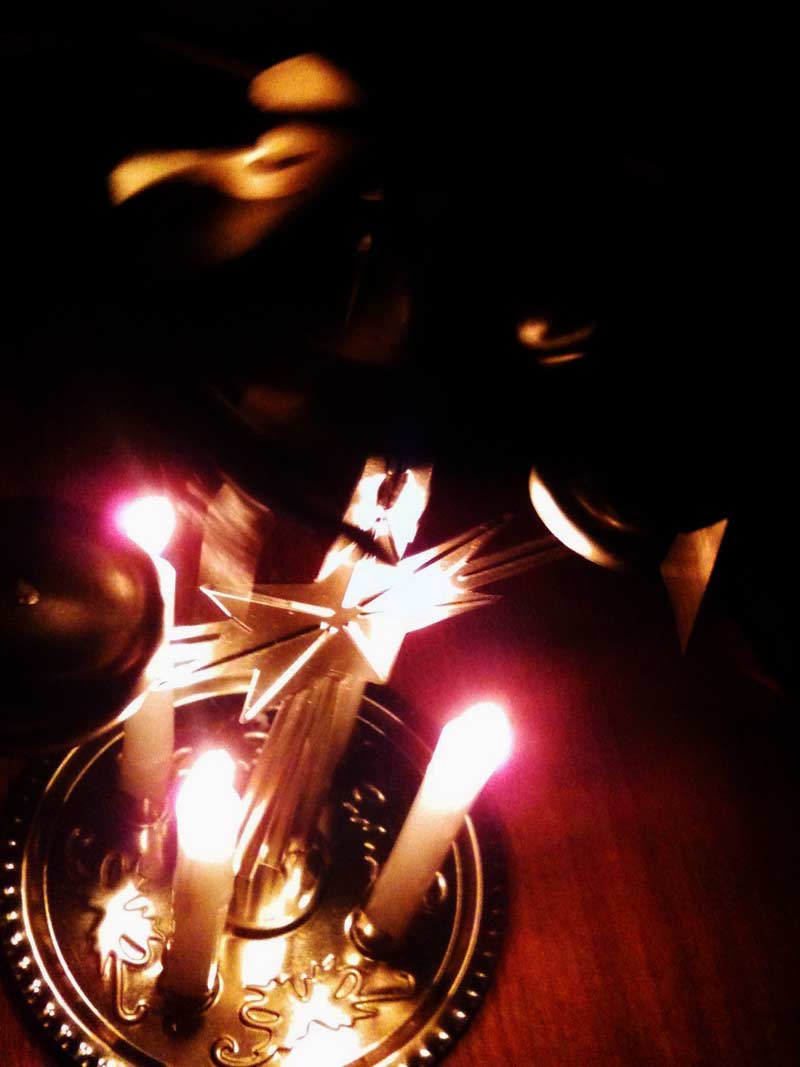
almost top view of fancy liturgical candles on a gold mount.Waiting. Waiting. Waiting.

All this waiting.

I’m tired of waiting.

And here I find myself in an entire season of waiting.

I’m tired of waiting for friends and family to find jobs.

I’m tired of waiting for the housing market to rebound.

I’m tired of waiting for the country to stop arguing about divisive issues with derogatory discourse.

I’m tired of waiting for my denomination to stop fighting to its death over who gets to be a minister and instead start ministering to the wounds of the world—including the ones we ministers have caused.

I’m tired of waiting to find time for ritual artistry, mission vision and sermon creation at the end of the week after the administration and budget balancing work is done.

And now, in this season of waiting and anticipation of the beautiful light of Christmas, it seems there are even more things both to do and to fail to do, more finances to worry about, more details to manage and more necessary distractions.

When did we change from the children who couldn’t wait for Christmas to arrive to the adults who can’t wait until Christmas is over?

How is it we find ourselves hurtling toward the Holy Child each year as one more task to get past?

Just wait until next Christmas, we promise ourselves, it won’t be this way next year!

But why wait?

Start now, with 12 days left until Christmas Eve.

Reclaim THIS Christmas right now.

There really is no need to just wait until next year.

Pause a moment now, yes, wait just a moment, and consider what most evokes the holy to you in this season. Spend another moment and let yourself be surrounded by that particular sense of the holy.

Now, in the 12 days that remain, consider one life-giving activity or tradition or memory from childhood or years past, and find another moment or two to remember it or even reclaim it.

One year, for me, this was to open a set of angel candle chimes from their 99-cent box, build them, light them and watch the angels spin from the rising heat of the candlelight. The table they were on was a mess, but I didn’t care. All I saw was the light and motion, and I heard the faint sound of a Christmas long past that became Christmas present.

What in your church, what in your home, what in your heart would give you a holy moment?

In each day, in those odd moments of reflection or even concern, pause to consider the holy.

Pause to surround yourself with a holy memory or create a holy moment.

Pause with the hope and prayer that come Christmas Eve, your season will already be filled with holy remembrances, holy moments and holy light.

Welcome the Holy Child with your heart already filled with a sense of Divine presence in your life.

We wait each year for the celebration of Divine Light in our lives, yet there really is no need to wait.

The Holy Light shines already.

Divine Creator, in this season of anticipation, guide us toward our hopes for the future fueled by our fondest memories of the past. We pause in prayer and in hope that in any moment time expands to fill with the Holy Light of Divine Love. In your most holy names we pray, Amen.

***

Rev. Karen Clark Ristine is a minister at Mission Hills United Methodist Church. After more than 20 years as a journalist, she entered seminary in 2006 and has been working in ministry ever since. After a lifelong tradition of sending out scores of Christmas cards each year, she was surprised to discover the irony that, as a minister, she no longer seemed to have time to continue that tradition. 

Lost in God

Someone asked, “What is love?” God answered, “You will know when you lose yourself in Me.”

–Jalalal-din Rumi, 13th century Sufi mystic

For the Sufi mystic, losing oneself in God is the answer. In the modern world, though, how many of us can completely lose ourselves in the search for God? Between getting the kids ready for school and feeding our families, working, and volunteering for our faith community, some of us may feel as if we have lost God in the process of living. But it is important to recognize that God is waiting for us to get closer and lose ourselves in God’s loving embrace. Living can be found in losing oneself. But how does one do this?

Like the Jewish mystics, you might lose yourself in the sacred scriptures. You could spend 15 minutes each morning, reading and reflecting on what the words you read mean to you. Perhaps you could journal your thoughts—giving yourself the deadline of Christmas—like a countdown of this holy month, which culminates in the celebration of the birth of baby Jesus. Rejoice in the gift of the one who so loves us. When you awaken on Christmas morning, read your journal and witness a birth of a new you.

Likewise, you might find, like the Sufi mystics, that music and dance is a useful tool for losing yourself in God. Decide today to spend each day rocking out to the music of your choice. Lose yourself in the words and sing at the top of your lungs. Spin around as if you are a Whirling Dervish and feel the loving embrace of God as you meditate on the beauty of the music spread before you—tantalizing your ears and heart. Feel your love of God in your body and lose yourself in this feeling.

This is the month of peace, forgiveness and love. In losing yourself in God, you just may find more of these in your life. Now, that is living!

Prayer:

Dear God, may I find a way to lose myself in you, each day, during this holy month. I recognize that sometimes I am so busy; and I cannot imagine how I can squeeze in another minute, but I desire to love more and thus live more. I covenant to spend time with you each day and, I hope I will find that the greatest gift given to me, when I awaken this Christmas morning, is the gift of life and…love. You said, “…faith, hope and love. But the greatest of these is love.” (1 Corinthians 13:13) I believe this, God. I will seek it, starting today. Amen.

***

Summer Albayati-Krikeche is a woman who speaks inside and outside of the church. She is a candidate for ordained ministry in the Unitarian Universalist church, and serves as an intern chaplain at Hoag Hospital in Newport Beach. While studying in seminary, Summer felt that all of the sacred scriptures called us to help the oppressed. Shortly, thereafter, she decided to help those considered the most marginalized in any society—orphans. In 2009, Summer founded Orphan Whispers, a nonprofit that helps orphans in conflict and post-conflict societies, and is currently focusing on the orphans in Iraq.  

Mr. Santa Chase

Nevertheless, those who receive instruction in the word should share all good things with their instructor. Do not be deceived: God cannot be mocked. People reap what they sow. Those who sow to please their sinful nature, from that nature will reap destruction; those who sow to please the Spirit, from the Spirit will reap eternal life. Let us not become weary in doing good, for at the proper time we will reap a harvest if we do not give up. Therefore, as we have opportunity, let us do good to all people, especially to those who belong to the family of believers.

Galatians 6: 6-10 (TNIV)

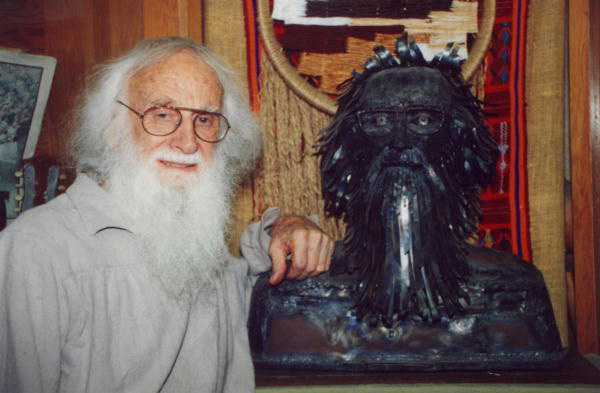
I was seven years old when Santa Claus appeared on my doorstep-long white beard, skinnier than I imagined and dressed in ‘normal clothes’ (perhaps he was going incognito for Christmas morning). But there he was! Carrying a package just for me!

My parents were delighted and looked relieved, and I was overjoyed to receive a handmade SASHA doll that Christmas! What a joyful day!

Charles Chase, aka SantaAs I grew up, I recognized Santa Claus in our small town. He worked in a shop called the Folk Music Center and was known-in his Claremont, California home as Mr. Chase. Mr. Chase (my Santa) made appearances throughout the year at the shop that sold those special dolls, along with guitars, ukuleles, banjos and drums, music from all over the world and the most fascinating coloring books I’d ever seen. The Folk Music Center, I imagined, was the southern California outpost of Santa’s Workshop, specializing in all-things-hippy.

Later in my life I heard the story from my parents’ perspective. As they were doing their Christmas shopping at the Southern California outpost of the Santa’s Workshop. they mistakenly picked up the display model container without the doll inside. They did not realize the container was empty until Christmas Eve when they were wrapping up the gifts for the grand unveiling on Christmas morning. Panicked, they phoned Santa at his home late Christmas Eve and asked him for some help. Instead of a cranky daughter who would open an empty package on Christmas morn, they woke to a delighted and amazed little girl who’d been privileged to a personal visit from Santa himself.

Mr. Chase, in his decision to help out a frazzled and panicked set of young parents, is the embodiment of Paul’s words in Galatians 6: 9-10:

Let us not become weary in doing good, for at the proper time we will reap a harvest if we do not give up. Therefore, as we have opportunity, let us do good to all people, especially to those who belong to the family of believers.

If we sow the seeds of love, joy, peace and hope in the busy holiday season, we will reap the harvest of the gospel of Jesus Christ! Conversely, if we sow the seeds of anxiety, distraction, stress and dysfunction, we will reap the harvest born of those negative things.

In our franticness and stress have we given up trying to do good? When does our activity become a spiritual detriment? How can we be the embodiment of the good news for others this season?

***

Rev. Dr. Krista S. Givens is a native of Southern California, where she began her work experience as an artist. She achieved her Bachelor’s Degree in Studio Art from Scripps College in 1994. Her call from God occurred rather suddenly in 1998 and God provided a path to attend seminary. Krista is a proud graduate of the Claremont School of Theology achieving her Masters of Divinity in 2001 and her Doctor of Ministry degree in 2007. Her doctoral thesis was centered in Ethics and pertains to the disciplinary rule for single pastors to be celibate and is titled: A Choice for Whole Love: Single and Celibate in the United Methodist Church. Krista’s previous appointments include an Associate Pastor position to the congregation of Kailua United Methodist Church in Kailua, Hawaii and a Senior Pastor position to the congregation of Westchester United Methodist Church in Los Angeles. She was ordained as an Elder in the California-Pacific Annual Conference in 2005 and has been the pastor at Hamburg’s International United Methodist Church since 2007.

At the Same Table

Psalm 35
Luke 22:14-30

Today we find ourselves in the second week of Advent, not only preparing to celebrate the incarnation of Jesus Christ, but looking even further into his life and ministry. Today we find Jesus near the end, gathered at the Passover meal, “eagerly desiring” to be at table one last time with those gathered in his midst. Soon after, he would be betrayed by one of his own, charged, convicted, and executed.

We look back to Psalm 35, a prayer for God’s help by a person accused falsely, persecuted by his enemies. The psalmist calls upon God to fight against those who fight him. The psalmist cries, “How long, O Lord, will you look on? Rescue me from their ravages, my life from the lions.” He continues, saying, if you save my life from these enemies of mine, then I will praise you.

The psalmist believes in his heart that God wants all servants of God to be well. Yet he struggles with reconciling how suffering at the hands of his enemies could possibly be in the interest of a great God.

How have you been repaid evil for good in your life? What is God’s role in any struggles or sufferings you face? How do you expect God to respond when you experience discrimination, singling out, or maltreatment?What might be the response of Jesus to such experiences?

Jesus, like the psalmist, is about to suffer at the hands of his enemies in today’s Gospel passage from Luke. Peter will deny him. Judas will betray him. What does he do? Unlike the psalmist, Jesus does not beg and plead with God. He does not wish for his enemies to suffer. Jesus instead gathers his friends and enemies all together, in one room. In their midst institutes the sacrament of Holy Communion, telling them, “do this in remembrance of me.” Gather together, share with one another, and be nourished.

After friends and enemies alike eat together. Jesus knows one will betray him. They almost immediately miss the point, arguing about who among them might be greatest. Even after a shared feast, they ask, “who will be first among us?” Jesus meets his disciples in their brokenness, and calls them toward wholeness. It’s a wholeness only encountered by being together.

Jesus calls us to gather with friends and enemies alike. Jesus calls us to sit at table with our enemies, along with our friends. Because it is in a place of nourishment, of community, of sharing, of reconciliation, that God ultimately works through each of us to restore us to wholeness.

This Advent, we are called to wait patiently for the coming of Christ. In places of prejudice, exclusion, and struggle, we patiently wait, continuing to meet face-to-face with even our enemies at table. In doing so, in opening our hearts even to those who hate us, we run the risk of running into the very Christ we thought had run from us.

***

Rev. Allison Rainey English serves as Associate Priest at St. Wilfrid of York Episcopal Church in Huntington Beach, California. Allison graduated from Claremont School of Theology with a Master of Divinity in 2008. Her passions for work in the church include liturgical development, pastoral care, youth ministry, and responsible social engagement/community building among the church.